
Freeke De Meyer, Independent Historian, freeke.demeyer@hotmail.com
Mirella Marini, Policy Officer at the University of Antwerp, mirella.marini@uantwerpen.be
The history of the Low Countries’ nobility is often told as a story of men. The names of counts, generals and diplomats dominate its historiography. Yet alongside many of these men stood influential women who played a crucial role in managing the family fortune, organising the household and administering their House’s estates. With the podcast series ‘Vrouwen des Huizes’, we aim to bring precisely this often-forgotten history to the fore.
Over the eight episodes of this podcast, we reconstruct the lives of two aristocratic women overshadowed by their male relatives for centuries. Not because they were unimportant, but because the historical narrative failed to include their voices. The podcast combines historical research with storytelling and shows how women such as Anne de Croy (1564–1635) and Marie Catherine de Merode (1743–1794) were key figures in their dynasties as well as in early modern society in general. Their stories invite us to rethink familiar historical narratives.
A key theme explored in the podcast is how noble women managed the family patrimonies. For the early modern nobility, land ownership was, after all, the primary source of wealth and power. It formed the economic foundation of their social and political position. The management of family estates was therefore of crucial importance.
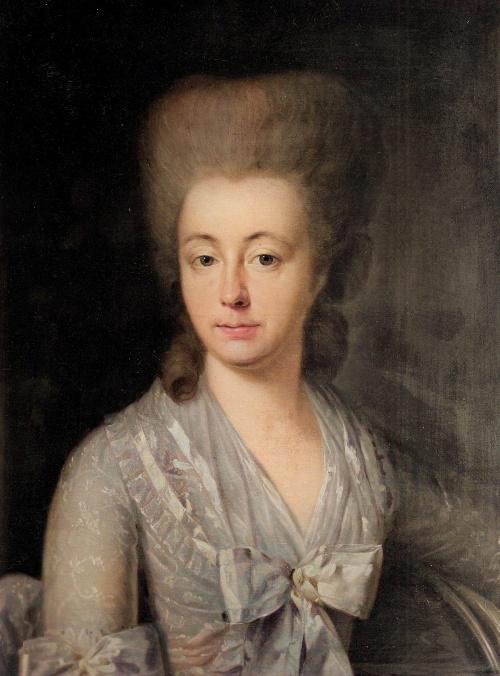
This article explores that theme in greater depth through two specific examples from slightly different time periods: duchess Anne de Croy (1564–1635) and countess Marie Catherine de Merode (1743–1794). Their lives demonstrate how noblewomen were able to wield considerable power and influence within a patriarchal system.
Estate management and the nobility in the early modern period
The Southern Low Countries’ nobility constituted a tiny elite. In the eighteenth century, for example, they accounted for just a quarter of a per cent of the population. Yet their influence was enormous. Noble power was based on land ownership and the associated manorial rights, on an extensive political network, and on military service and prestigious positions at court. Strategic marriages served to further consolidate that power base.
A noble family was, in essence, an economic enterprise that required efficient management. Land ownership generated income through, among other things, rents paid by farmers, the letting of houses, and the exploitation of forests, pastures and mines. Feudal rights such as tolls, mill rights or the collection of taxes were age-old privileges that provided additional income. Estate management involved overseeing lease agreements, monitoring income and expenditure, supervising stewards, conducting legal negotiations, investing in land and infrastructure, and protecting subjects. It was a role that required knowledge, authority and strategic insight.
For a long time, historians viewed land management primarily as a male domain. This perception was linked to the idea of so-called ‘separate spheres’, in which men were associated with the public world of politics and the economy, whilst women were thought to operate within the private sphere of family and household life. Recent studies have offered a somewhat more nuanced view. Historical research shows that aristocratic women were involved in the management of the estates and the family’s finances in general. In England, for instance, historian Briony McDonagh demonstrated that noble women constituted a significant minority of landowners and were often responsible for the management of estates. Also in other European regions, such as France and Spain, studies point to aristocratic women playing active roles in the management of the family estates.
However, this doesn’t imply women were legally on an equal footing with men. The early modern society was deeply patriarchal, which was reflected in the legal system. In the Ancien Régime, married women were legally incapable of acting on their own behalf and were therefore legally dependent on their husbands. They were often unable to enter into contracts or sell property without his consent. Single women and widows often had more rights. They were usually able to act more independently, manage their own property and take legal action. Or at least in theory. In real life, women had more freedom to act than the law would suggest. In women’s history, this scope for action is referred to as ‘agency’. Noblewomen from the Habsburg Netherlands thus had sufficient authority, autonomy, as well as some legal rights to play a decisive role in the management of their family’s estates. We demonstrate this through the two leading figures of our podcast series: duchess Anne de Croy and countess Marie Catherine de Merode.
The case Anne de Croy (1564-1635)
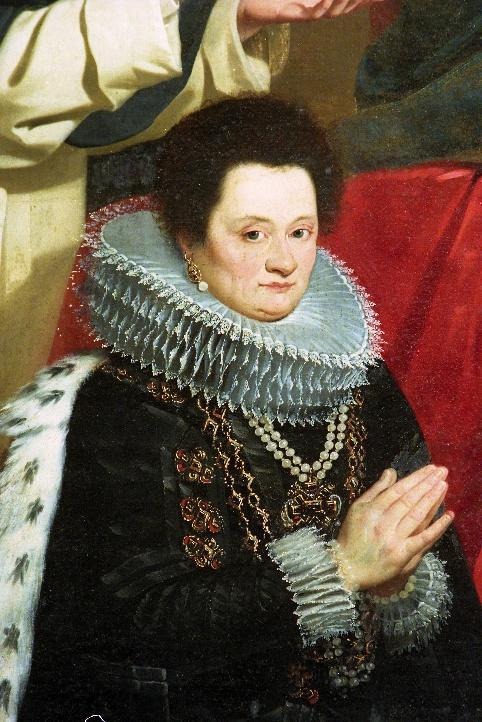
On 4 January 1564, Anne de Croy was born a scion of what was then the most prominent family in the Netherlands: the Croy family. Her father was Philip III de Croy, duke of Aarschot. If we disregard the ‘main’ Low Countries duchies (the principalities of Luxembourg, Brabant, Gelderland and Limburg, all of which were in the hands of the Habsburgs), the duchy of Aarschot was the only other duchy in the Netherlands. From the moment of her birth, Anne de Croy thus occupied a privileged position within aristocratic society.
Two years after her birth, the Iconoclastic Fury broke out, the prelude to the Dutch Revolt which played a crucial role in her later life. In 1587, she married Charles, princely count of Arenberg, a diplomat and serving in the Spanish army. Their marriage was very successful in more ways than one. The couple had 12 children, 10 of whom survived childhood. Financially, things were initially difficult due to the Revolt, but this changed when, in 1612, Anne’s brother, the duke of Aarschot, died childless. Following a legal battle, she acquired the duchy of Aarschot, effectively doubling their joint patrimony.
From the earliest beginnings of her marriage, Anne de Croy managed the family patrimony, due to the extensive powers of attorney granted her by her husband Charles. In 1600, Charles even appointed her superintendent of the entire family patrimony. Historiography emphasizes that it’s mostly widows which were capable of exercising any financial power, yet contrary to these views, this example demonstrates that even during their marriages women wielded considerable financial authority. This sort of power is more than mere agency in spite of legal limits: Anne de Croy operated within a legal framework, with a clearly recognised legal and social position.
Even after her husband’s death in 1616, she continued to administer the joint Arenberg-Aarschot patrimony with her council. This patrimony comprised seigniories spread across what is now northern France, Belgium, the Netherlands and Germany. She resided in Enghien (Hainaut), a prestigious estate purchased by the couple in 1606, which they had transformed into a princely residence.
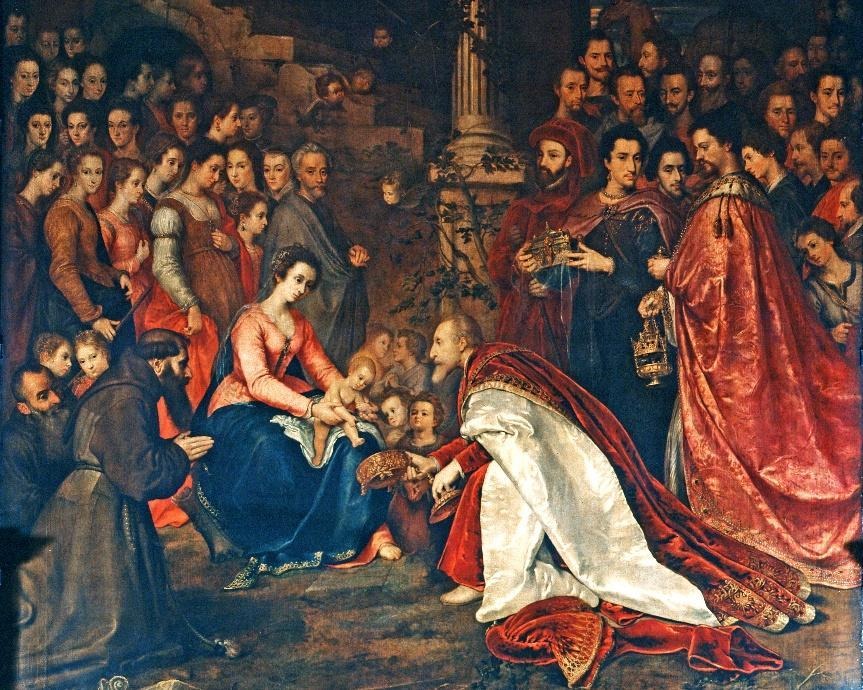
On her death in 1635, she left behind a phenomenal fortune, which, strictly speaking, was neither a part of the Arenberg nor of the Aarschot patrimony, which were (in theory at least) in the hands of her eldest son, although the boundary between their respective administrations remained quite opaque. The most significant bequests in her will were reserved for various religious causes, such as the Capuchin monastery in Brussels or the orphanage and Conceptionist convent in Enghien. Several hundred thousand guilders were thus bequeathed, a personal fortune built up entirely through more than 40 years of successful financial management.
The case Marie Catherine de Merode (1743-1794)
A second interesting example is that of Marie Catherine de Merode, born in 1743 in Leuven. She belonged to one of the wealthiest noble families in the Southern Netherlands.
Following her father’s death in 1769, she became the heir to the patrimony of the Merode-Rubempré branch. However, as she was married, the management of those estates was carried out by her husband, Philippe Maximilien de Merode. Even then, however, Marie Catherine still wielded some influence. Legally her husband could not sell any property without her consent. In a letter from 1771, Philippe Maximilien complained that his wife refused to sign a deed of sale. She wanted to discuss the matter in person first, which indicates her involvement in management affairs.
Following the death of her husband in 1773, her position changed. As a widow, she exercised la garde noble and consequently became responsible for the patrimony of her son, still a minor. From then on, Marie Catherine was at the head of two noble patrimonies: the Merode-Rubempré patrimony, which she had inherited from her father, and the Merode-Westerlo patrimony, which she managed on behalf of her son Charles.
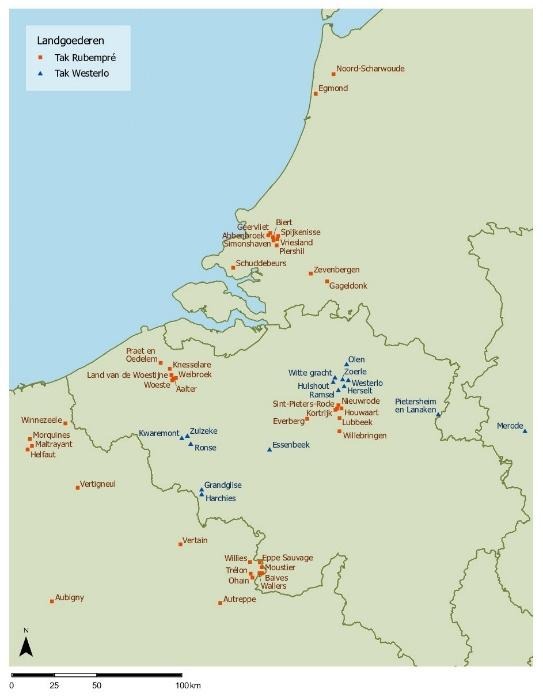
Marie Catherine was twenty-nine years old at the time and immediately took charge of the family’s extensive administrative apparatus. She informed all the stewards that she would henceforth be the person with ultimate responsibility.
Marie Catherine was known for her strict oversight of the accounts. Stewards were required to provide her with a monthly financial summary and an annual detailed statement of accounts, complete with supporting documents. She scrutinised these documents thoroughly and pointed out errors to her staff where necessary. She also kept her own record of the income from her estates.
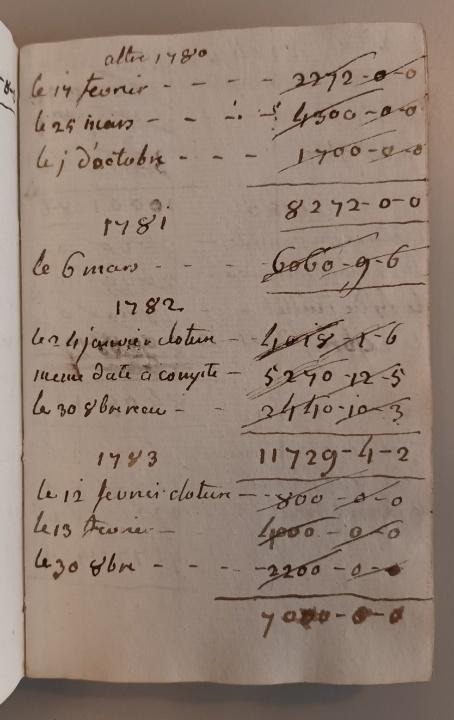
This financial acumen was evident, for example, in her decision in 1774 not to sell an estate in Artois immediately. Although her steward believed the offer was favourable, Marie Catherine judged that the land was worth more. Two years later, the estate was eventually sold for a price approximately forty per cent higher than the original offer.
In 1774, she discovered she was pregnant by Chrétien Louis of Lannoy. This was a major problem for her as she probably hadn’t intended to remarry. After all, Marie Catherine loved the power she wielded as a widow. She chose not to remarry immediately because she didn’t want to lose that autonomy. She gave birth in secret in Strasbourg and didn’t marry until 1776, under strict conditions. She had it explicitly stated in her marriage contract that she would continue to manage her patrimony. Her new husband respected this and on several occasions confirmed before a notary that he fully supported her decisions. In this way, Marie Catherine succeeded in retaining her economic and legal independence even as a married woman.
Conclusion
Anne de Croy and Marie Catherine de Merode played a far more active role in the economic life of the Habsburg Netherlands than had long been assumed. The growing body of research into the role of women in society, both at home and abroad, shows that they were no exception in this regard.
Although women enjoyed limited rights, noblewomen found scope to exercise considerable power and influence, not least through the management of the family patrimony. They made important decisions regarding investments, debts and land management, which demonstrates that the management of the patrimony was not exclusively a male affair. On the contrary, certain specific legal provisions enabled aristocratic women to play a crucial role in the survival and growth of their dynasties.
By bringing these stories back into the spotlight, the podcast series ‘Vrouwen des Huizes’ aims to contribute to a broader and more nuanced picture of society in the modern era. It is an invitation to look beyond the established canon and to hear the voices that have remained hidden in the folds of history for far too long.
Listen to the podcast Vrouwen des Huizes here (in Dutch).
Bibliography
State Archives of Belgium, Family archives of Merode-Westerlo.
Arenberg Archives in Enghien. https://www.arenbergfoundation.eu/nl/archives-enghien
Blaufarb, R. (2015) ‘The Phenomenon on Female Lordship. The Example of the Comtesse de Sade’, in: D. Hafter en N. Kushner. Women and Work in eighteenth-century France, Baton Rouge, 2015, pp.16-32
Coolidge, G. (2011), Guardianship, Gender, and the Nobility in Early Modern Spain, Surrey, pp. 155-160.
D’hoore, B. (2014),, Inventaire des archives de la famille de Merode Westerloo. 1. Papiers personnels de la famille de Merode. 2 dln. Brussel.
De Meyer, F. (2023), Hoog geboren, ambitieus en eigenzinnig. Marie Catherine Jospehe, gravin van Merode en prinses van Rubempré en Everberg (1743-1794), Gorredijk.
De Meyer, F. (2024) “Een gedreven patrimoniumbeheerder. Marie Catherine Josephe, gravin van Merode en prinses van Rubempré en Everberg (1743-1794)” Historica. Tijdschrift voor gendergeschiedenis, 47/1 (2024) pp. 8-14. https://doi.org/10.21827/historica.47.1.8-14
De Meyer, F. (2024) “Een steenrijke, autonome en ambitieuze gravin. Marie Catherine Josephe, gravin van Merode en prinses van Rubempré en Everberg (1743-1794)” Eigen schoon en de Brabander/Geschied-en Oudheidkundig Genootschap van Vlaams-Brabant, 107/1 (2024) pp. 51-72.
Derez, M., Vanhauwaert, S. en Verbrugge, A. (2018), Arenberg – Portret van een familie, verhaal van een verzameling, Turnhout.
Geevers, E. and Marini, M. (2015), Dynastic identity in Early Modern Europe: rulers, aristocrats and the formation of identities, Farnham.
Marini, M. (2010) “Female Authority in the Pietas Nobilita: Habsburg Allegiance during the Dutch Revolt.” Dutch Crossing, 34/1 (2010) pp. 5–24. https://doi.org/10.1179/030965610X12634710163060
Marini, M. (2013) “Pendanten in leven en dood: Vroomheid, identiteit en autoriteit in de testamentaire beschikkingen van Anna van Croy, hertogin van Aarschot en prinses-gravin van Arenberg (1564-1635).” in: P. Bitter, V. Bonenkampova en K. Goudriaan. Graven spreken. Perspectieven op grafcultuur in de middeleeuwse en vroegmoderne Nederlanden, Hilversum, 2013, pp. 153-170.
Marini, M. (2021) “The dynastic diplomacy of the Princely Count of Arenberg at the Stuart court in 1603.” The Seventeenth Century, 36/3 (2021), pp. 389–411. https://doi.org/10.1080/0268117X.2021.1924987
Marini, M. (2024) “Votre bien bonne maytresse”. Hoe Anna van Croy (1564-1635), hertogin van Aarschot en prinselijke gravin van Arenberg het Arenberg-Croy patrimonium beheerde.” Eigen schoon en de Brabander/Geschied-en Oudheidkundig Genootschap van Vlaams-Brabant, 107/1 (2024) pp. 13-36.
McDonagh, B. (2017), Elite Women and the Agricultural Landscape, 1700-1830, Abingdon, pp. 1-14.
Roegiers, J. (2002), Arenberg in de Lage Landen : een hoogadellijk huis in Vlaanderen en Nederland (M. Derez, M. Nelissen, J.-P. Tytgat, & A. Verbrugge, Red.), Universitaire pers Leuven.
Schattkowsky M. (2003), Witwenschaft in der Frühen Neuzeit: Fürstliche und adlige Witwen zwischen Fremd-und Selbstbestimmung, Leipzig.
Vickery, A. (1998), The Gentleman’s Daughter: Women lives in Georgian England, New Haven.