In 2025, AVG-Carhif celebrated its 30th anniversary. To mark the occasion, we posted a monthly favourite from the team (and more) on our social media.
In this video, Loraine Furter, graphic designer and researcher, and Lissa Choukrane, researcher, present their favourite picks: three periodicals dating from the 1970s and 1980s.
English translation of the video
AVG-Carhif: Who are you?
Loraine: We are Lissa Choukrane and Loraine Furter. I am a graphic designer who teaches and also does research on subversive publications and methods and ways of producing feminist, decolonial, anti-ableist publications, and so on.
Lissa: I work on the place of women and LGBTQIA+ people in the book trade. I am a researcher, I teach and I tell stories as a book worker.
AVG-Carhif: What is your favourite item in the AVG-Carhif collections?
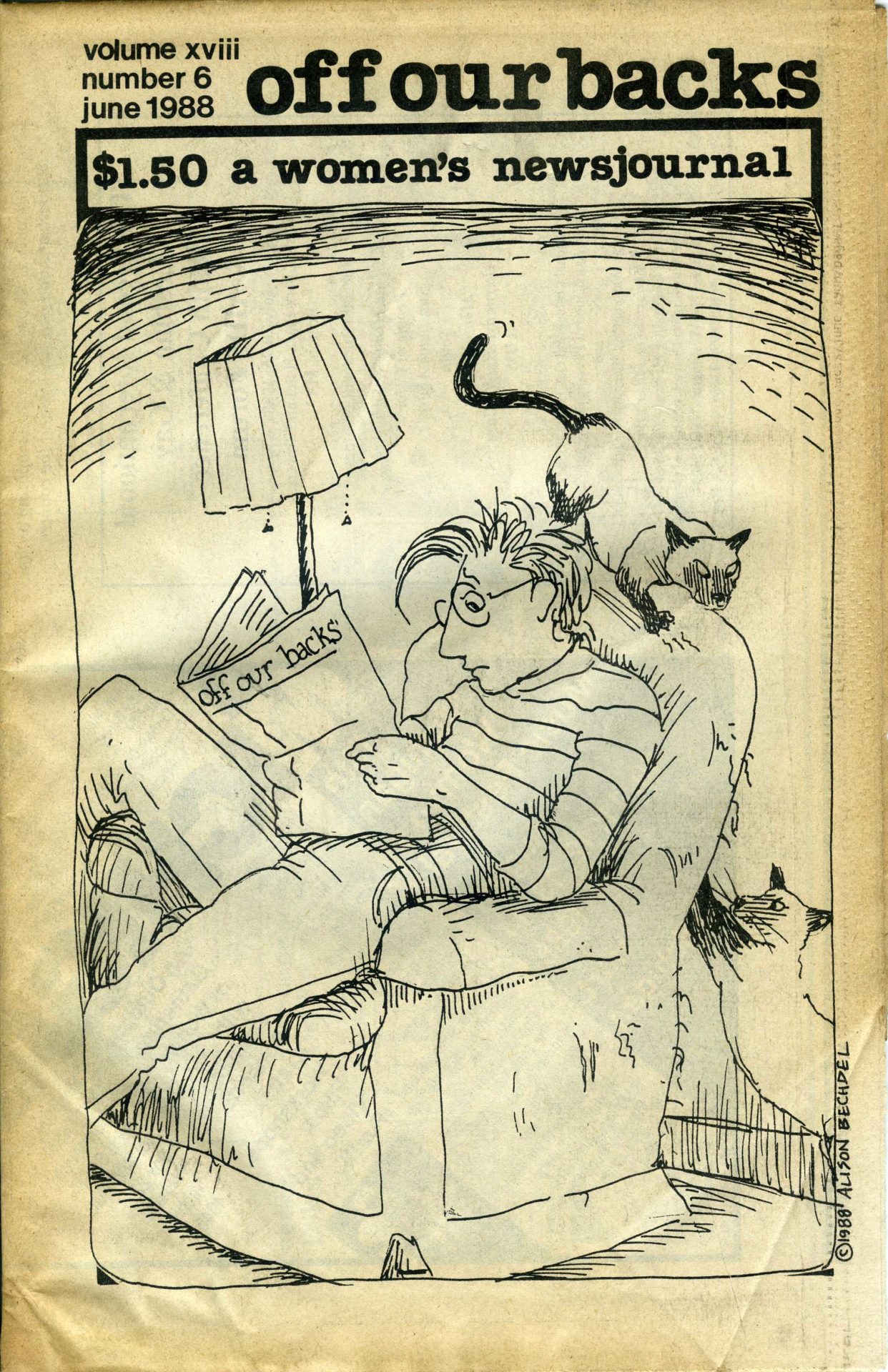
Lissa: We have lots. We couldn’t choose, so we picked three. Le Torchon brûle: a French publication that appeared from 1970 to 1973. La Rabouilleuse, which is a Brussels publication linked to a bookshop of the same name, which was on Chaussée d’Ixelles in the 1970s, and the magazine Off Our Backs, an American magazine that appeared for a very long time.
Loraine: And then there are our favourites, which aren’t just the piles, but also the little details inside them. For example, we love this little gem. It’s in issue three of La Torchon Brûle. A little box that says, “Dear readers, the team behind issue three apologises for not writing an editorial, they are simply exhausted. They would like to point out that all the articles are collective, with a little asterisk, except when “we” is “I”. We’ll tell you all about it in another issue.” And what we really like, Lissa and I, are all those little things that show how the editions were produced, where you can actually see, or rather feel, the people behind them. And then there’s also the political dimension, in fact, of militant exhaustion and that kind of thing that comes through in these gems. And we’re going to show you a little gem from Off Our Backs, which we thought was cute. There are lots of things, but what we really liked was that on the first page of Off Our Backs, there’s an invitation to come and do the layout, and it just says, “Come” period. “You don’t have to be an expert, just a feminist.”
Lissa: We wanted to talk about La Rabouilleuse, which was linked to the bookshop of the same name. And in the first issue of January 1982, they did a little test on the desires and values of readers, in particular whether people thought that buying a book was a trivial gesture. And whether choosing a bookshop could be a political gesture. And then they concluded: “If you answered yes to most of these questions, you need to help us. How? The answers and projects are in these pages.” And so throughout their periodical, they informed their readers about what was at stake with their independent, feminist bookshop.
AVG-Carhif: Why are these magazines important to you?
Lissa: We were already in love with similar magazines, which we worked on in a project we did together called ‘Agrafes et bouts de ficelle: ode aux messy reliures’ (Ode to messy bindings: staples and stringles), which also had an English version. Yes, and we worked on the bindings of these publications, on their folds and staples too.
Loraine: The materiality of the objects speaks to the project, to the hands that made them and also to the hands that held them. We really researched this super material dimension of publishing, and it always brings us back to it.
Lissa: Yes. There’s also a link to more contemporary publications. And seeing how strategies that were used in the past can be reused. For example, in the context there, there is the Petit Livre Rouge des Femmes, which deliberately chose a more mainstream A4 format like women’s magazines, and a strategy that we saw reused by the Censored or Gaze projects, which are contemporary art and feminist magazines. To camouflage themselves a little in order to bring out some really powerful ideas.